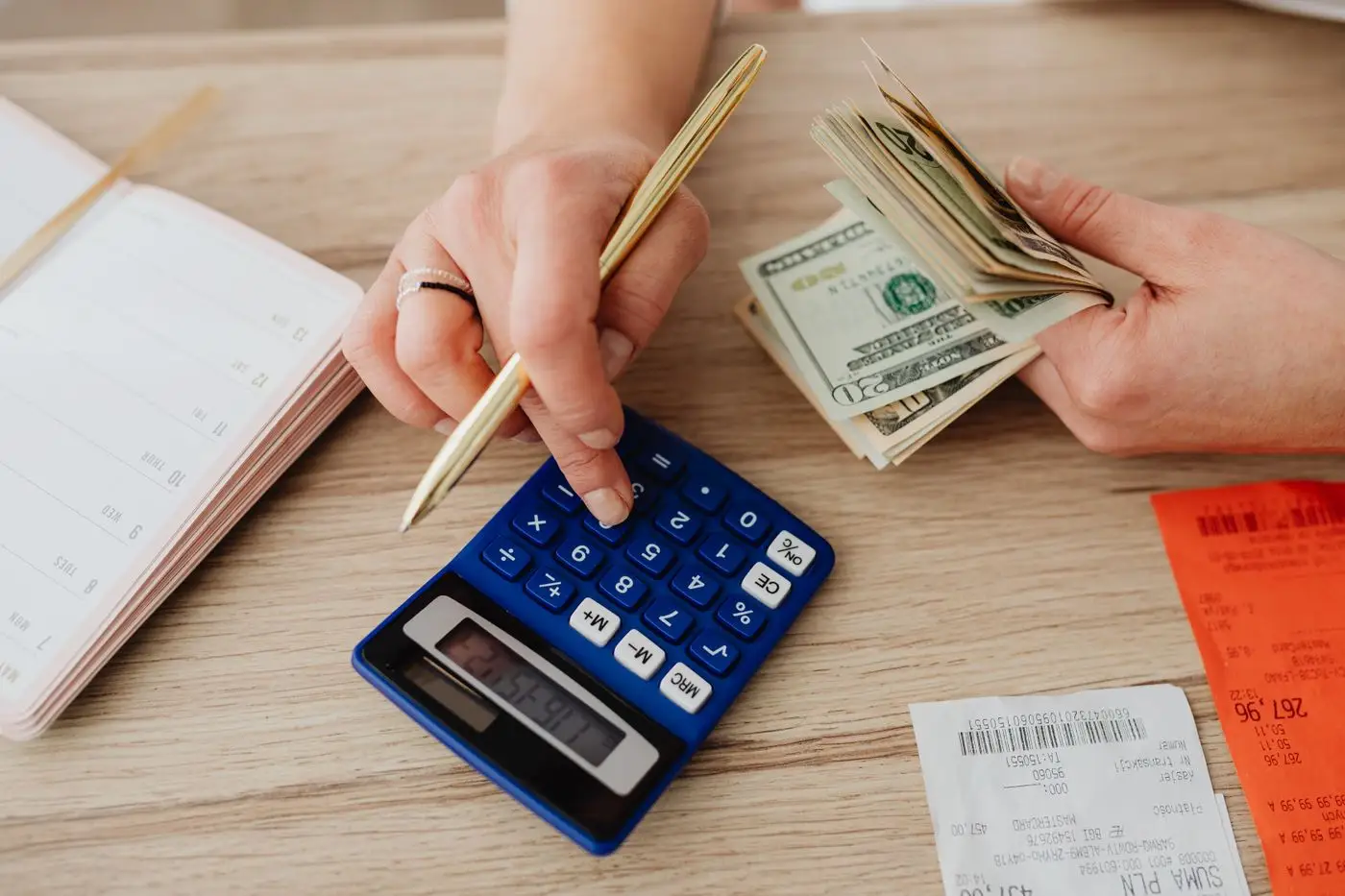
If you’ve started a budget with real determination and quietly abandoned it by week three, you’re in very good company — and nothing about it means you’re bad with money. Most budgets fail because of how they’re designed, not because of the person using them. This guide explains why budgets fail and walks you through a simpler spending plan built for real life, irregular bills and actual human feelings.
Key takeaways
- Budgets usually fail because they rely on 20 precise categories, monthly reviews that come too late and willpower that runs out by Thursday.
- A spending plan works with three moving parts: fixed commitments, money set aside for the future, and one weekly “flex” number for everything else.
- Irregular costs — gifts, car repairs, annual renewals — are the silent budget killer. Turn them into a monthly amount and they stop being emergencies.
- A 15-minute weekly check-in gives you far more cash flow control than a two-hour month-end post-mortem.
- Overspending is information, not failure. The plan is built to absorb it and adjust.
Why budgets fail (and why it isn’t your fault)
Traditional budgets look sensible on paper. You list every category, assign a number to each one and promise to stay inside the lines. Then life happens. Here are the design flaws we see most often when people ask us why budgets fail for them.
They demand false precision
A budget with separate lines for groceries, household supplies, dining out, coffee, takeout, snacks and “misc” assumes you can predict each one to the dollar. You can’t, and nobody can. A trip to a big-box store that covers food, shampoo and a birthday card instantly scrambles three categories. Every mismatch feels like a small failure, and enough small failures make the whole system feel pointless.
They run on willpower
Most budgets are built around restriction: “dining out: $100, not a cent more.” Restriction works for a while, but willpower is not a renewable resource on a Tuesday night after a long day. When a plan only works if you feel strong every single day, it is fragile by design.
They forget the irregular stuff
Car registration. A wedding gift. The dental bill. The annual software renewal that always arrives the same week as a school trip. These aren’t surprises — they happen every year — but a monthly budget treats them as if they were. When they land, the budget “breaks,” and it looks like you overspent when really the plan was incomplete.
The feedback arrives too late
Reviewing your spending once a month is like checking the map after you’ve arrived at the wrong city. By the time you notice the dining category is $180 over, the money is gone and the only option left is guilt. Real cash flow control needs feedback while there’s still time to change course.
They ignore what you actually care about
A budget that cuts everything equally treats your weekly climbing session, which you love, the same as an app subscription you forgot existed. That’s why so many people experience budgeting as deprivation. A good plan should protect the spending that genuinely makes your life better and quietly drain the spending that doesn’t.
Budget vs. spending plan: what actually changes
A spending plan is a budget alternative that keeps the useful parts of budgeting — knowing where your money goes, deciding in advance — and drops the parts that make people quit. Instead of policing dozens of categories, you decide on a few big things once and give yourself one simple number to steer by every week.
| Traditional budget | Spending plan |
|---|---|
| 15–30 categories tracked to the dollar | 3 buckets: fixed, future, flex |
| Reviewed monthly, after the fact | 15-minute weekly check-in, while you can still adjust |
| Irregular costs treated as surprises | Irregular costs turned into a steady monthly amount |
| Savings is whatever is left over | Savings is moved first, automatically |
| Success = staying under every limit | Success = bills paid, goals funded, flex spent on what you value |
| Overspending = failure | Overspending = data, adjusted next week |
The biggest shift is psychological. With a spending plan, once your bills and future are taken care of, the flex money is genuinely yours. You don’t need to justify a dinner out to a spreadsheet. You just need to know how much is left this week.
How to build your spending plan in one sitting
Set aside about an hour, open your banking app and grab the last two or three months of statements. If you haven’t looked closely at your transactions in a while, our 60-minute bank statement audit is a useful warm-up, because it surfaces the forgotten charges you’ll want to remove before you start.
- Find your real take-home pay. Use what actually lands in your account each month after tax, retirement contributions and benefits — not your salary. If your pay varies, use your lowest typical month from the past six to twelve months as your baseline.
- List your fixed commitments. Rent or mortgage, utilities, insurance, phone and internet, loan payments, childcare, minimum debt payments and any subscriptions you’re deliberately keeping. These are the bills that arrive whether or not you think about them.
- Annualize the irregular costs. Write down every expense that comes once or a few times a year, estimate the yearly total and divide by 12. That monthly figure gets set aside every month, like a bill.
- Pay your future first. Decide on a savings or debt-payoff amount you can sustain, and set it to move automatically on payday. Start smaller than feels impressive; consistency beats ambition here.
- Calculate your weekly flex number. Subtract steps 2, 3 and 4 from step 1, multiply by 12 and divide by 52. That’s what you can spend each week on groceries, fuel, eating out, fun and everyday life — with no other categories to track.
- Name your joy lines. Pick two or three things inside your flex money that you’re protecting on purpose: the Friday takeout, the book habit, the kids’ swim lessons. When money gets tight, you’ll trim elsewhere first.
A worked example
Illustrative example only — your numbers will be different. Imagine a household with a monthly take-home pay of $5,400.
- Fixed commitments: rent $1,750, utilities $180, insurance $210, phone and internet $120, car payment $340, minimum credit card payment $150. Total: $2,750.
- Irregular costs: car maintenance and registration $900, gifts and holidays $1,200, annual renewals $300, medical and dental out-of-pocket $600, one trip $1,800. Total: $4,800 a year, or $400 a month.
- Future: 10% of take-home, or $540 a month, split between an emergency fund and extra debt payments.
That leaves $5,400 − $2,750 − $400 − $540 = $1,710 a month for flex spending. Converted to a weekly number: $1,710 × 12 = $20,520 a year, divided by 52 weeks = about $395 a week.
That one number covers groceries, fuel, eating out, household bits, entertainment and the random Tuesday purchases. Instead of checking eight categories, this household asks one question: “How much of our $395 is left this week?”
Set up your accounts for effortless cash flow control
A spending plan gets dramatically easier when your bank accounts do the sorting for you. The simplest setup uses two or three accounts:
- Bills account. Your paycheck lands here. Fixed commitments and the monthly irregular-cost amount stay here, and all bills are paid from this account automatically.
- Future account. A separate savings account (ideally at a different bank or at least not visible on your main app screen) that receives your automatic savings transfer on payday.
- Flex account. Each week, an automatic transfer moves your flex number — $395 in our example — into a checking account with its own debit card. Whatever is in this account is what you can spend.
With this setup, you no longer need to track spending in detail. Your flex balance is your tracker. If it says $140 on Thursday, you know exactly where you stand for the weekend without opening a spreadsheet.
Keep a small buffer — say one week’s flex amount — in the bills account so a slightly early bill or a pay date that falls on a weekend never causes an overdraft. The Consumer Financial Protection Bureau’s bank account guide explains how overdraft coverage works and how to opt out if you prefer a declined card to a fee.
Taming irregular expenses for good

If there’s one change that rescues more spending plans than any other, it’s this. Irregular expenses are the reason a “good” month suddenly turns into a credit card month. Here’s how to catch them.
Build your irregular-cost list
Scroll back through 12 months of transactions (or think through the calendar month by month) and note anything that doesn’t happen every month. Common ones include:
- Car registration, servicing, tires and repairs
- Birthdays, holidays, weddings and baby showers
- Annual subscriptions, memberships and professional fees
- Back-to-school costs, camps and activity fees
- Medical, dental, vision and pet care
- Home maintenance and replacing appliances
- Travel, including visiting family
Give it a home
Add the yearly totals, divide by 12 and set that amount aside every month — either in your bills account or a separate “irregular” savings account. When the car needs new tires, the money is already there. Nothing broke; the plan worked exactly as designed.
If your first-year estimate is off, that’s normal. After 12 months you’ll have real numbers and can adjust. If you want to see how long it will take to build up a specific pot, the savings-goal timeline in our free money tools does the arithmetic for you.
The 15-minute weekly Money Brief
At Brief Owler, we call the weekly check-in a Money Brief: a short, calm look at your money, the way an owl reads the dark — attentive, not anxious. Pick a regular time (Sunday evening and Friday lunch are popular) and keep it to 15 minutes.
- Check the flex balance. How much is left from this week? Note it without judgment.
- Scan the week’s transactions. Look for anything unexpected: a new subscription, a fee, a price increase, a charge you don’t recognize.
- Look ahead seven days. Any birthdays, trips, school costs or bills due? Decide now how you’ll handle them.
- Notice one pattern. Did a certain day, mood or situation drive spending? Just notice it — you’re gathering information.
- Make one adjustment. Move money, cancel something, plan a cheaper dinner night. One small action is enough.
That’s it. Fifteen minutes a week adds up to about 13 hours a year — far less time than most people spend worrying about money, and far more useful.
What to do when you overspend
You will overspend sometimes. Everyone does. The difference between a plan that lasts and one that collapses is what happens next. Here’s the protocol we suggest:
- Name it plainly. “I spent $85 more than my flex this week.” No adjectives, no “I’m so bad with money.”
- Ask what happened. Was it a true one-off (a friend’s birthday dinner), a missing irregular category, or a pattern? If you notice stress, boredom or tiredness behind it, our guide to emotional spending triggers will help you spot the loop.
- Choose a fix. Take it from next week’s flex, pull from the irregular pot if it really belonged there, or accept it and move on if it was worth it.
- Update the plan if needed. If you overspend in the same way three weeks running, the plan is wrong, not you. Raise that number and lower another.
Notice what’s missing: punishment. Shame tends to make spending worse, not better, because it creates exactly the kind of stress many of us soothe by spending. Treat overspending like a weather report — useful, temporary and not a verdict on your character.
Adapting the plan to your life
For couples
Couples often do well with a shared bills account and future account, plus individual flex accounts. Each person gets the same personal flex amount (or one you agree is fair), and neither needs to explain their own spending. That small piece of autonomy removes a lot of friction. If money conversations tend to get tense, our Couples Money Alignment sessions are designed for exactly that.
For freelancers and variable earners
If your income changes month to month, build your plan on a baseline month — your lowest typical income — and send everything above it to a holding account. In strong months, the holding account fills; in lean months, you top up from it. Your weekly flex stays steady even when your invoices don’t. Solo business owners who want to formalize this can look at our Business Owner Pay-Yourself System.
If you’re paying off debt
Put your extra debt payments in the “future” bucket alongside savings. Even a small emergency fund matters here, because without one, the next car repair tends to go straight back on the card.
Is this financial advice?
No. Brief Owler provides money coaching and education, not investment, tax or legal advice. A spending plan is a tool for day-to-day cash flow; for decisions about investments or taxes, speak with a qualified professional.
Frequently asked questions
Is a spending plan just a budget with a different name?
It shares the same goal — knowing where your money goes — but the structure is different. Instead of dozens of categories reviewed monthly, a spending plan uses three buckets (fixed, future, flex), a weekly check-in and an automatic account setup. That makes it less about restriction and more about steering.
How much should I put toward savings?
There’s no single right number. Many people start with a percentage they can sustain without feeling squeezed, even if it’s small, and raise it after a few months. A consistent $100 a month is more useful than an ambitious $600 that gets cancelled in week two.
What if my weekly flex number feels too small to live on?
That’s valuable information. Revisit your fixed commitments and irregular costs first — that’s often where the biggest savings hide, such as an old insurance policy or unused subscriptions. If it’s still tight, temporarily lowering the savings amount is better than building a plan you can’t follow.
Do I still need to track every purchase?
Not if you use a separate flex account. The account balance tells you what’s left for the week. You’ll still glance at transactions during your weekly check-in to catch fees, new subscriptions or patterns, but there’s no need to categorize every coffee.
How long does it take for a spending plan to feel natural?
It varies from person to person. Many people find the first month involves some adjusting as irregular costs and real spending patterns show up. Treat the first few weeks as a calibration period rather than a test you can pass or fail.